
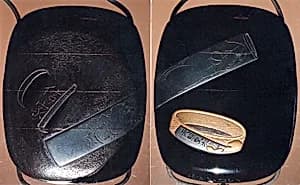
Case (Inrō) with Design of Sword Fittings
Unknown Artist
19th century
Medium
Lacquer, roiro ishime, black, gold, silver hiramakie, incised; Interior: nashiji and fundame
Dimensions
2 3/4 x 2 1/4 x 13/16 in. (7 x 5.7 x 2 cm)
Classification
Inrō
Culture
Japan
Department
Asian Art
Museum
Metropolitan Museum of Art, New York, NY
Credit
The Howard Mansfield Collection, Purchase, Rogers Fund, 1936
Accession Number
36.100.256
Rights
Public Domain
Tags
Art Historical Context
This exquisite 19th-century Japanese *inrō*—a compact lacquer case worn suspended from the belt via cords, netsuke, and ojime—served a stylish carrier for medicines seals, or tobacco during the Edo period (1603–1868) and into the Meiji era. Lacking pockets in traditional kimono, samurai and merchants alike prized these diminutive boxes (just 2¾ x 2¼ x 13/16 inches) for their practicality and artistry. The design of sword fittings, such as tsuba guards and menuki ornaments, evokes the refined warrior culture of feudal Japan, blending functionality with symbolic prestige. Crafted by an unknown master, the exterior gleams in black *roiro ishime* (a polished, sharkskin-textured lacquer) adorned with gold and silver *hiramakie*—flat-sprinkled metal powders—and intricate incising for depth and shimmer. The interior contrasts with shimmering *nashiji* (pear-skin gold flecks) and *fundame* (dense metal powder base), showcasing the pinnacle of *maki-e* lacquering techniques honed over centuries. These methods, requiring layers of lacquer, gold dust, and meticulous polishing, highlight Japan's unmatched skill in transforming sap from the urushi tree into durable, luminous art. Acquired through The Howard Mansfield Collection via the Rogers Fund in 1936, this *inrō* at the Metropolitan Museum of Art exemplifies the cultural zenith of Japanese decorative arts, where everyday objects became treasures of elegance and status.