
Ceiling on the South Side of Nakht's Offering Chapel
1914–1915; original ca. 1410–1370 B.C..
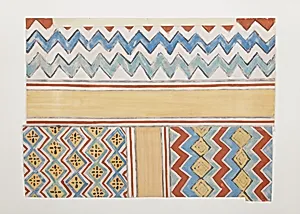
Medium
Tempera on paper
Dimensions
L. 107 cm (42 1/8 in.); w. 88 cm (34 5/8 in.); scale 1:1 not framed
Classification
Facsimile, TT 52, ceiling
Period
Twentieth Century; original New Kingdom
Department
Egyptian Art
Museum
Metropolitan Museum of Art, New York, NY
Credit
Rogers Fund, 1915
Accession Number
15.5.19o
Rights
Public Domain
Art Historical Context
This tempera on paper reproduction captures the intricate ceiling decoration from the south side of Nakht’s Offering Chapel, an ancient Egyptian tomb dating to Dynasty 18 of the New Kingdom (ca. 1410–1370 B.C.). Created at full scale by British Egyptologist and artist Norman de Garis Davies between 1914 and 1915, the work faithfully records the original painted patterns—likely featuring celestial motifs, geometric designs, or symbolic elements typical of New Kingdom funerary architecture. Such ceilings often evoked the heavens, offering the deceased protection and a connection to the divine in the afterlife. Davies was renowned for his meticulous copies of Egyptian tomb art, produced during expeditions sponsored by the Metropolitan Museum of Art. Working directly from the monuments, he used tempera to replicate colors and details with remarkable precision, allowing scholars and visitors to study fragile originals without risking damage. Acquired by the museum through the Rogers Fund in 1915, this piece preserves visual information from a chapel that may no longer be fully accessible or intact today. As part of the Met’s Egyptian Art collection, the reproduction highlights the museum’s early twentieth-century efforts to document and share Egypt’s artistic heritage. It offers modern audiences an intimate glimpse into the sophisticated decorative traditions of ancient Theban tombs while underscoring the enduring value of careful artistic documentation.
About the Artist
Norman de Garis Davies · 1865–1941
Norman de Garis Davies (1865–1941) was a British Egyptologist and archaeological artist whose meticulous copies of ancient Egyptian tomb paintings constitute one of the most important records of pharaonic art ever made. Born in Ashton-under-Lyne, Lancashire, he originally trained for the ministry before being drawn into Egyptology through his involvement with the Egypt Exploration Fund in the 1890...