
Censer
Unknown Artist
second half 18th century
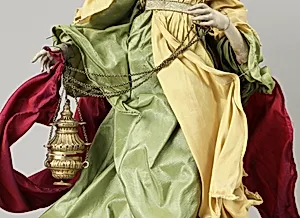
Medium
Silver gilt
Dimensions
H. 3 in. (7.6 cm.); H. (with chains) 12 1/4 in. (31.1 cm.)
Classification
Crèche
Culture
Italian, Naples
Department
European Sculpture and Decorative Arts
Museum
Metropolitan Museum of Art, New York, NY
Credit
Gift of Loretta Hines Howard, 1964
Accession Number
64.164.144
Rights
Public Domain
Art Historical Context
This exquisite silver gilt censer, crafted by an unknown artist in Naples during the second half of the 18th century, stands as a delicate treasure from the golden age of Neapolitan crèche artistry. Measuring just 3 inches (7.6 cm) tall but extending to 12¼ inches (31.1 cm) with its chains, it was designed as an accessory for elaborate nativity scenes, or *presepi*, which vividly recreated the Christmas story with lifelike figurines and intricate props. The gleaming silver, lavishly gilded for a radiant effect, highlights the opulence of Baroque decorative arts in southern Italy, where such items evoked the incense-filled rituals of worship. Neapolitan crèches, a cherished cultural tradition since the 17th century, transformed humble manger scenes into theatrical spectacles blending sacred devotion with everyday Neapolitan life—think shepherds, vendors, and angels amid the Holy Family. Censers like this one added sensory drama, swinging from chains to release fragrant incense, symbolizing prayers rising to heaven. Its meticulous craftsmanship, from the ornate chasing to the functional chains, reflects the guild expertise of Naples' silversmiths, who catered to both churches and affluent collectors. Today, this censer graces The Metropolitan Museum of Art's European Sculpture and Decorative Arts department, a 1964 gift from Loretta Hines Howard. It invites visitors to imagine the flickering candlelight and swirling scents of a Baroque *presepio*, bridging 18th-century faith with modern wonder.