
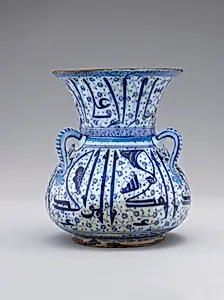
Ceramic Vessel in the Shape of a Mosque Lamp
Unknown Artist
1525–40
Medium
Stonepaste; painted in blue under transparent glaze
Dimensions
H. 6 11/16 in. (17 cm) Max. diam: 5 13/16 in. (14.8 cm)
Classification
Ceramics
Department
Islamic Art
Museum
Metropolitan Museum of Art, New York, NY
Credit
Harris Brisbane Dick Fund, 1959
Accession Number
59.69.3
Rights
Public Domain
Tags
Art Historical Context
This exquisite Ceramic Vessel in the Shape of a Mosque Lamp, between 1525 and 1540, hails from the Islamic world during the late Mamluk early Ottoman period, likely in Egypt or Syria. Standing just 6 11/16 inches tall, its petite form mimics the elegant glass lamps that once illuminated grand mosques, suspended by chains to cast a soft, sacred glow. Made of stonepaste—a refined ceramic body developed in the Islamic lands to imitate Chinese porcelain—the vessel features intricate blue paintings under a transparent glaze, a technique that ensured vibrant, durable decoration resistant to wear. The underglaze painting in coveted cobalt blue, applied before firing, highlights the technical mastery of Islamic potters, who achieved porcelain-like translucency without true porcelain clay. This medium flourished in the 14th–16th centuries, blending functionality with artistry in everyday and ceremonial objects. Culturally, the mosque-lamp shape evokes spiritual symbolism: light representing divine guidance in Islamic tradition, often inscribed with Quranic verses on real lamps. As a ceramic interpretation, it reflects the era's fusion of utility and devotion, bridging architecture and domestic life. Acquired through the Harris Brisbane Dick Fund in 1959, this piece from the Metropolitan Museum of Art's Islamic Art collection invites us to appreciate the ingenuity of anonymous artisans whose work lit up both mosques and homes.