
Ceremonial Blades
c. 100 CE
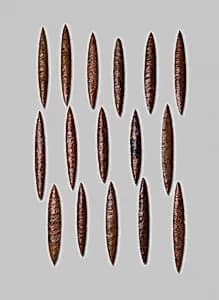
Medium
Red obsidian
Dimensions
Each approx. l: H.: 15.2 cm (6 in.)
Classification
blade (stone tool)
Department
Arts of the Americas
Museum
Art Institute of Chicago
Accession Number
185166
Rights
Public Domain
Art Historical Context
These striking **Ceremonial Blades** the Colima culture of ancient West Mexico, dating to around 100 CE, exemplify the masterful stoneworking of pre-Columbian artisans. Crafted from vibrant red obsidian—a rare and highly prized volcanic glass—the blades measure about 15.2 cm (6 in.) in length. Their razor-sharp edges, achieved through expert pressure-flaking techniques, reveal the precision of Mesoamerican lithic technology, where obsidian was knapped into tools far superior to metal blades in sharpness. Housed in the Art Institute of Chicago's Arts of the Americas department and classified as stone tools, these blades transcend mere utility. In Colima society, part of the Shaft Tomb cultural horizon (ca. 200 BCE–500 CE), such implements held deep ceremonial significance. Red obsidian, sourced from distant quarries, symbolized blood and life force, often used in rituals like auto-sacrifice or offerings to deities. Their polished, symmetrical forms suggest they were status symbols buried with elites in elaborate shaft tombs alongside ceramics and figurines. Today, these blades offer a window into Colima's ritual world, blending functionality with spiritual power. Visitors marvel at how a simple stone tool embodied cosmic beliefs, reminding us of the ingenuity that flourished in pre-Columbian Americas long before European contact.