
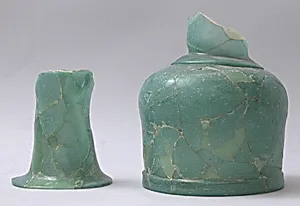
Chalice
Unknown Artist
3rd–12th century
Medium
Glass
Dimensions
H. 7 in. (17.8 cm) Diam. 4 9/16 in. (11.6 cm) Wt. 9.5 oz. (269.4 g)
Classification
Glass
Department
Islamic Art
Museum
Metropolitan Museum of Art, New York, NY
Credit
Rogers Fund, 1919
Accession Number
19.196.2
Rights
Public Domain
Art Historical Context
This elegant glass chalice, dating from the 3rd to 12th century, hails from the rich tradition of Islamic art and exemplifies the craftsmanship of ancient glassmakers. Standing at 7 inches (17.8 cm) tall with a diameter of 4 9/16 inches (11.6 cm) and weighing just 9.5 ounces (269.4 g), its delicate form suggests it was designed for practical yet refined use—perhaps for serving beverages in ceremonial or daily settings. Acquired through the Rogers Fund in 1919, it now graces the Metropolitan Museum of Art's Islamic Art department. Glass was a celebrated medium in the Islamic world, spanning late antiquity through the medieval period, when artisans mastered blowing and shaping techniques to create translucent vessels that rivaled luxury metals. This broad timeframe encompasses the transition from pre-Islamic Sassanian influences to the flourishing Islamic era, where such objects highlighted technological innovation and aesthetic restraint. Chalices like this reflect the cultural emphasis on functionality blended with subtle beauty, often evoking the clarity and purity valued in Islamic society. Though the artist remains unknown, the chalice's survival speaks to the durability of glass and its enduring appeal. Visitors, pause to admire how this unassuming piece bridges centuries, offering a tangible link to a vibrant artistic heritage.