
Chef-de-piece (Furnishing Fabric)
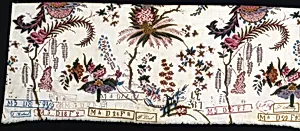
Medium
Cotton, plain weave; block printed
Dimensions
33 × 83.6 cm (13 × 32 7/8 in.); Weft repeat: H.: 52.4 cm (20 5/8 in.)
Classification
textile
Department
Textiles
Museum
Art Institute of Chicago
Accession Number
150163
Rights
Public Domain
Art Historical Context
This exquisite *Chef-de-pièce (Furnishing Fabric)*, in the style of Jean-Baptiste Pillement, dates to around 1850–75 and exemplifies mid-19th-century textile artistry. Pillement, an 18th-century French designer celebrated for his rococo-inspired motifs of delicate flowers, foliage, and fantastical landscapes, influenced generations of decorators. Though created decades after his death, this cotton piece channels his whimsical, asymmetrical patterns, likely intended as a sample for upscale home furnishings like curtains or upholstery. Crafted from plain-weave cotton and block-printed by hand, the fabric showcases a labor-intensive technique where carved wooden blocks inked with color were stamped repeatedly to create the repeating weft pattern (52.4 cm high). Block printing, a hallmark of pre-industrial textile production, allowed for vibrant, intricate designs on a practical scale—here, a compact 33 × 83.6 cm panel. This method persisted into the 19th century amid the rise of machine printing, preserving artisanal quality for luxury markets. Housed in the Art Institute of Chicago's Textiles Department, this fabric reflects the era's blend of revivalism and opulence, bridging Pillement's playful elegance with Victorian domestic tastes. Visitors will appreciate its tactile charm, a window into how intricate designs transformed everyday interiors into artistic havens.