
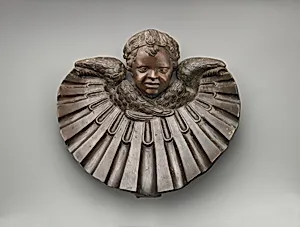
Cherub and shell
possibly 1470s
Medium
Bronze
Dimensions
Overall (wt. confirmed): 15 1/2 x 17 1/2 in., 31lb. (39.4 x 44.5 cm, 14.0615kg) [Weight shell: 11.75 kg; Weight head: 1.75 kg]
Classification
Sculpture-Bronze
Culture
Italian, Florence
Department
European Sculpture and Decorative Arts
Museum
Metropolitan Museum of Art, New York, NY
Credit
Gift of Alastair Bradley Martin, 1958
Accession Number
58.115
Rights
Public Domain
Tags
Art Historical Context
Nestled in the Metropolitan Museum of Art's European Sculpture and Decorative Arts collection, *Cherub and Shell* is a delightful bronze sculpture from 1470s Florence, crafted by an artist closely associated with the master Donatello. This intimate work captures the Renaissance fascination with putti—those plump, mischievous childlike angels symbolizing joy and innocence. Donatello's influence shines through in its lively naturalism and fluid anatomy, hallmarks of early Florentine Renaissance sculpture that bridged Gothic traditions with classical revival. Cast in bronze using the sophisticated lost-wax technique, the piece weighs a substantial 31 pounds overall (shell: 11.75 kg; head: 1.75 kg), measuring 15½ x 17½ inches. Bronze's enduring sheen and rich patina made it ideal for decorative fountains or garden ornaments, evoking the opulent villas of Medici-era Florence. The cherub's playful interaction with the shell hints at themes of abundance and the sea's bounty, common motifs in Italian Renaissance art blending mythology and Christian iconography. A generous gift from Alastair Bradley Martin in 1958, this sculpture invites visitors to marvel at the technical prowess of Florentine workshops, where even small-scale bronzes like this embodied the era's humanistic spirit and artistic innovation.