
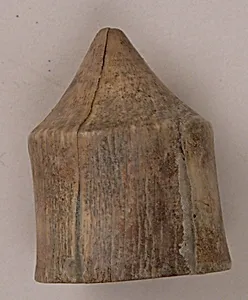
Chess Piece, Pawn
Unknown Artist
9th–11th century
Medium
Ivory
Dimensions
H. 1 1/4 in. (3.1 cm)
Classification
Gaming pieces
Department
Islamic Art
Museum
Metropolitan Museum of Art, New York, NY
Credit
Pfeiffer Fund, 1972
Accession Number
1972.9.25
Rights
Public Domain
Tags
Art Historical Context
This delicate ivory pawn, carved in the 9th–11th century, offers a glimpse into the refined world of Islamic gaming culture. Standing just 1¼ inches tall, it hails from the early medieval Islamic period, likely the Abbasid era, when chess—known as *shatranj*—thrived as a popular pastime among scholars, merchants, and nobility. Originating from ancient Indian chaturanga and refined in Persia, chess spread rapidly across the Islamic world, symbolizing intellect and strategy. Crafted from elephant ivory, a luxurious material prized for its smooth carvability and luminous quality, this pawn showcases masterful miniature sculpture. Artisans employed fine incising and polishing techniques to create its sturdy, faceted form, typical of gaming pieces designed for portability and repeated use on ornate boards. Such objects were not mere toys but status symbols, often part of elaborate sets buried with owners or traded along Silk Road routes. Housed in the Metropolitan Museum of Art's Islamic Art department (Pfeiffer Fund, 1972), this anonymous masterpiece highlights how everyday leisure intersected with high art. Pawns like this one formed the foot soldiers of the chess army, underscoring the game's tactical depth—much like the cultural exchanges that shaped medieval Islamic society. A tiny survivor of history, it invites us to ponder the minds behind its moves.