
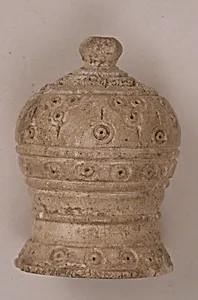
Chess Piece, Pawn
Unknown Artist
8th–11th century
Medium
Bone
Dimensions
H. 1 5/8 in. (4.2 cm)
Classification
Gaming pieces
Department
Islamic Art
Museum
Metropolitan Museum of Art, New York, NY
Credit
Pfeiffer Fund, 1972
Accession Number
1972.9.29
Rights
Public Domain
Tags
Art Historical Context
This delicate bone pawn, crafted by an unknown artist between the th and 11th, exemplifies the exquisite craftsmanship of early Islamic gaming pieces. Standing just 1 5/8 inches tall, it was carved from animal bone—a practical and abundant medium in the medieval Islamic world, valued for its fine grain andability. Such small-scale sculptures highlight the skill of artisans who transformed humble materials into functional art, often using simple tools to incise details and shape contours. Chess, known as *shatranj* in the Islamic tradition, originated in India and flourished in Persia before spreading across the Abbasid Caliphate. This pawn reflects that golden age of intellectual and cultural exchange, where the game symbolized strategy and wit among scholars, caliphs, and merchants. Housed in the Metropolitan Museum of Art's Islamic Art Department, it offers a tangible link to everyday pastimes that bridged entertainment and philosophy. Though modest in size, this pawn underscores chess's enduring cultural importance, influencing European chess by the 12th century. Its survival speaks to the precision of ancient carvers and the game's timeless appeal in fostering community and cunning.