
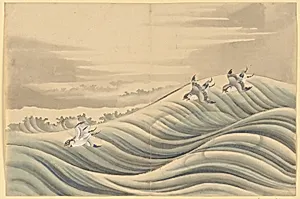
Chidori Birds
18th–19th century
Medium
Ink and color on paper
Dimensions
11 x 16 1/2 in. (27.9 x 41.9 cm)
Classification
Paintings
Culture & Period
Japan · Edo period (1615–1868)
Department
Asian Art
Museum
Metropolitan Museum of Art, New York, NY
Credit
Gift of Annette Young, in memory of her brother, Innis Young, 1956
Accession Number
56.121.23
Rights
Public Domain
Tags
Art Historical Context
Katsushika Hokusai, one of Japan's most celebrated artists of the Edo period (1615–1868), created *Chidori Birds* in the 18th–19th century using ink and color on paper. This intimate painting, measuring just 11 x 16½ inches, exemplifies Hokusai's mastery of ukiyo-e—a "pictures of the floating world" style that captured fleeting moments of beauty in everyday life. Best known for his iconic woodblock print *The Great Wave off Kanagawa*, Hokusai here turns his keen eye to nature, depicting chidori (plovers), shorebirds often associated with the rhythmic dance of waves. The artwork's delicate medium highlights traditional Japanese techniques, where ink gradients (sukimi-boku) and subtle color washes evoke motion and vitality. Swirling waves crash beneath flocks of chidori in flight, their wings rendered with fluid, expressive lines that convey both grace and the wild energy of the sea. This harmonious blend of birds and water reflects Edo-era fascination with seasonal beauty and impermanence, themes central to Japanese aesthetics like wabi-sabi. Housed in the Metropolitan Museum of Art's Asian Art department as a gift from Annette Young in 1956, *Chidori Birds* invites visitors to appreciate Hokusai's innovative spirit. At over 80 when he produced many late masterpieces, he once declared, "Everything I have done up to now is no more than child's play." This piece endures as a poetic snapshot of nature's poetry.
About the Artist
Katsushika Hokusai · 1760–1849
Katsushika Hokusai (1760-1849) stands as one of history's most influential artists, a Japanese master who revolutionized the ukiyo-e woodblock print tradition and profoundly shaped Western art. Born in the Katsushika district of Edo (modern-day Tokyo) to an artisan family, Hokusai lived through nearly nine decades of extraordinary creative evolution, adopting over thirty different artistic names t...