
Chiyoda Castle (Album of Men)
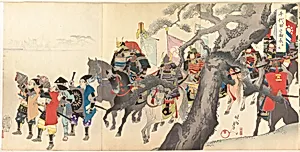
Medium
Triptych of woodblock prints; ink and color on paper
Dimensions
L. (page) 13 7/8 in. (35.2 cm); W. (page) 9 1/4 in. (23.4 cm); thickness of album 1 9/16 in. (4 cm)
Classification
Prints
Culture & Period
Japan · Meiji period (1868–1912)
Department
Asian Art
Museum
Metropolitan Museum of Art, New York, NY
Credit
Gift of Mrs. W. Walton Butterworth, 1979
Accession Number
JP3586
Rights
Public Domain
Tags
Art Historical Context
**Chiyoda CastleAlbum of Men)** by Yōshū (Hashimoto) Chikanobu visitors into the dynamic world of late 19th-century Japan. Created in 1897 during the Meiji period (1868–1912), this triptych of woodblock prints forms part of an album showcasing men amid scenes at Chiyoda Castle, historic heart of Edo (modern Tokyo). Chikanobu, a master of ukiyo-e—the "pictures of the floating world"—specialized in vivid historical narratives, blending valor with everyday life. Tags like weapons, swords, men, and horses suggest portrayals of samurai or warriors, evoking the fading bushido spirit as Japan modernized rapidly. The medium—ink and color on paper, measuring about 14 by 9 inches per page—highlights woodblock printing's artistry. Carved by specialists and hand-printed in layers, these prints achieve brilliant hues and fine details, making art accessible to the masses before photography dominated. As an album (1 5/16 inches thick), it offers an intimate, collectible experience, now a treasured gift to the Metropolitan Museum of Art's Asian Art department in 1979. This work captures Meiji Japan's cultural crossroads: nostalgia for feudal glory amid Western influences. Chikanobu's precise lines and bold compositions celebrate masculine prowess, reminding us of ukiyo-e's role in preserving Japan's visual heritage for global audiences.
About the Artist
Yōshū (Hashimoto) Chikanobu · 1838–1912
Toyohara Chikanobu, born Hashimoto Naoyoshi in 1838 in Echigo Province (modern Niigata Prefecture), emerged as one of the last great ukiyo-e masters during Japan's Meiji era. The son of a low-ranking samurai retainer to the Sakakibara clan, he trained initially in the Kanō school of painting before turning to ukiyo-e printmaking. He studied under a disciple of Keisai Eisen, then joined the studio ...