
Chute
Unknown Artist
18th century
Medium
Gilt bronze
Dimensions
Length: 4 1/2 in. (11.4 cm)
Classification
Metalwork-Gilt Bronze
Culture
French
Department
European Sculpture and Decorative Arts
Museum
Metropolitan Museum of Art, New York, NY
Credit
Gift of J. Pierpont Morgan, 1906
Accession Number
07.225.510.454
Rights
Public Domain
Art Historical Context
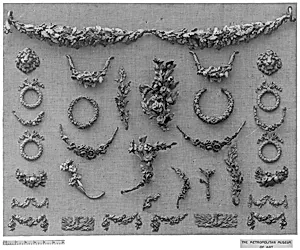
Nestled in the Metropolitan Museum of Art's European Sculpture and Decorative Arts collection, *Chute* is a exquisite example of 18th-century French gilt bronze craftsmanship. Measuring just 4½ inches in length, this diminutive metalwork piece exemplifies the era's penchant for luxurious, functional ornamentation. Gilt bronze, created by casting bronze and applying a thin layer of gold via mercury gilding—a skilled and hazardous technique—lent an opulent sheen to household objects, evoking the grandeur of royal interiors. Produced in France during the lavish Rococo period or the refined Louis XVI style, *Chute* likely served as a decorative waterspout or mount for fountains, furniture, or lavabos, channeling water with elegant flair. Its anonymous artistry reflects the collaborative workshops of Parisian bronziers, who chased and polished surfaces to achieve intricate details and a mirror-like finish. Such pieces were status symbols for the aristocracy, blending utility with sculptural beauty. Generously gifted to the Met in 1906 by financier J. Pierpont Morgan, a titan of collecting, *Chute* underscores the enduring allure of French decorative arts. Visitors are invited to marvel at its delicate glow, a testament to the technical virtuosity that defined Enlightenment-era luxury.