
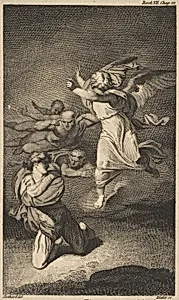
Clarence's Dream (Shakespeare, Richard III, Act 1, Scene 4)
Medium
Etching and engraving
Dimensions
plate: 4 7/8 x 2 7/8 in. (12.4 x 7.3 cm) sheet: 6 7/16 x 3 5/8 in. (16.4 x 9.2 cm)
Classification
Prints
Department
Drawings and Prints
Museum
Metropolitan Museum of Art, New York, NY
Credit
Harris Brisbane Dick Fund, 1917
Accession Number
17.3.2829
Rights
Public Domain
Tags
Art Historical Context
This etching and engraving captures a haunting moment from William Shakespeare’s *Richard III*, Act 1, Scene 4, in which the imprisoned Duke of Clarence recounts a vivid nightmare of drowning and betrayal before his. Created in 1774, the small print reflects the growing 18th-century fascination with Shakespeare’s plays as sources for visual art, allowing audiences to experience dramatic scenes beyond the stage. The work employs etching and engraving, techniques prized for their ability to produce fine detail and tonal depth in reproducible prints. Such methods made literary illustrations widely accessible through books and portfolios, bridging theater, literature, and the visual arts for Georgian-era viewers. Though the plate lists multiple names, including William Blake and Thomas Stothard, it exemplifies the collaborative printmaking practices of the period. Today in the Metropolitan Museum’s collection, the image preserves the emotional intensity of Clarence’s dream while highlighting how Shakespeare’s narratives inspired generations of artists and printmakers.
About the Artist
William Blake|Thomas Stothard|John Johnson|William Shakespeare · 1757–1827
William Blake (1757–1827) stands as one of the most visionary and unconventional artists in British history, a poet-painter-printmaker whose mystical imagination and radical vision profoundly shaped the Romantic movement. Born in London's Soho district, Blake experienced visions from childhood—claiming to see angels in trees at age eight—and these spiritual encounters would guide his art throughou...