
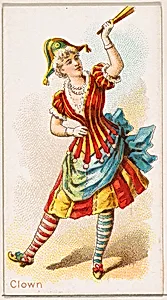
Clown Dancer, from the Dancing Women series (N186) issued by Wm. S. Kimball & Co.
Medium
Commercial color lithograph
Dimensions
Sheet: 2 11/16 × 1 7/16 in. (6.9 × 3.7 cm)
Classification
Prints|Ephemera
Department
Drawings and Prints
Museum
Metropolitan Museum of Art, New York, NY
Credit
The Jefferson R. Burdick Collection, Gift of Jefferson R. Burdick
Accession Number
63.350.216.186.49
Rights
Public Domain
Tags
Art Historical Context
Step into the whimsical world of late 19th-century advertising with *Clown Dancer* from the *Dancing* series (N186), by Wm. S. & Co. in 1889. This petite commercial color lithograph, just 2 11/16 × 1 7/16 inches, was likely issued as an insert in cigarette packages—a clever marketing tactic by the tobacco company to entice collectors and boost sales during the height of America's "cigarette card" craze. Chromolithography, the medium here, revolutionized mass-produced color printing, allowing vivid hues and intricate details on affordable ephemera. Kimball's series captured the era's fascination with graceful women in exotic dance attire, blending fantasy and performance art. The clown dancer motif evokes the playful, theatrical spirit of vaudeville and circus culture, idealizing feminine allure amid Victorian social norms. Housed in the Metropolitan Museum of Art's Jefferson R. Burdick Collection—a treasure trove of American print ephemera—this piece highlights how everyday commerce fueled artistic innovation, preserving fleeting glimpses of popular entertainment for posterity.
About the Artist
William S. Kimball & Company · 1850–1950
**William S. Kimball & Company**, a pioneering American tobacco manufacturer, was established in 1846 in Rochester, New York, by William S. Kimball and James C. Hart. The firm quickly grew into one of the city's largest employers, particularly of women, producing popular brands like Peerless chewing tobacco, Rigatta and Fireside smoking tobacco, and Vanity Fair cigarettes. Under Kimball's leadersh...