
Coffin of Khnumnakht
Unknown Artist
ca. 1850–1750 B.C.
Medium
Wood, paint
Dimensions
L. 207.5 cm (81 11/16 in); W. 51.8 cm (20 3/8 in); H. 68 cm (26 3/4 in)
Classification
Coffin, Khnumnakht
Period
Middle Kingdom
Department
Egyptian Art
Museum
Metropolitan Museum of Art, New York, NY
Credit
Rogers Fund, 1915
Accession Number
15.2.2a, b
Rights
Public Domain
Tags
Art Historical Context
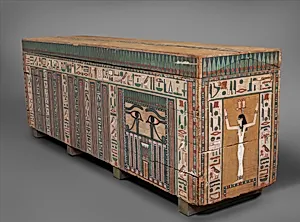
The Coffin of Khnumnakht a striking wooden funerary object from ancient Egypt’s Middle Kingdom, dating to around 1850–175 B.C. in the late 12th mid-13th Dynasty Created by an unknown artist and painted in vivid colors, this elongated coffin (over two meters long) was made to house and protect the body of Khnumnakht. In Egyptian belief, such coffins were vital for the deceased’s safe passage into the afterlife, combining practical enclosure with powerful spiritual symbolism. Typical of the period, the coffin is adorned with hieroglyphic inscriptions, prominent eyes, and images of a goddess. These painted elements were thought to magically empower the deceased—allowing them to see, receive offerings, and gain divine protection. Wood painted with mineral pigments was a favored medium in the Middle Kingdom, enabling artisans to produce detailed, colorful designs that conveyed religious texts and iconography more accessibly than earlier stone sarcophagi. Now in the Metropolitan Museum of Art (acquired via the Rogers Fund in 1915), this coffin offers a vivid window into Middle Kingdom funerary customs and artistic skill. It reminds us how ancient Egyptians blended craftsmanship, writing, and imagery to ensure eternal well-being.