
Coin
Unknown Artist
dated A.H. 838/ 1434 CE
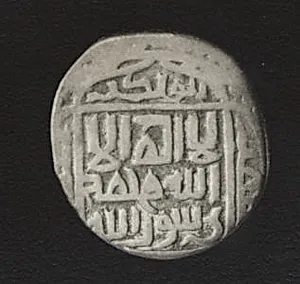
Medium
Silver
Dimensions
Diam. 13/16 in. (2 cm) Th. 1/16 in. (0.1 cm) Wt. 62 gr (4.018g)
Classification
Coins
Department
Islamic Art
Museum
Metropolitan Museum of Art, New York, NY
Credit
Bequest of Joseph H. Durkee, 1898
Accession Number
99.35.2398
Rights
Public Domain
Art Historical Context
This delicate silver coin, struck in A.H. 838 (1434 CE), offers a window into the vibrant world of 15th-century Islamic. Minted during a time when Islamic empires like the Mamluks and Timurids flourished across the Middle East and beyond, such coins served as both currency and cultural artifacts. Measuring just 13/16 inch (2 cm) in diameter and weighing 62 grains (4.018 g), its compact form belies its historical heft, circulating in bustling trade routes from Cairo to Central Asia. In the Islamic tradition, coins were canvases for exquisite Arabic calligraphy, often bearing the ruler's name, mint location, and date—hallmarks of precision craftsmanship. This example, classified in the Metropolitan Museum of Art's Department of Islamic Art, highlights the technical mastery of silver striking, where intricate inscriptions were hammered with remarkable clarity on thin metal (just 1/16 inch or 0.1 cm thick). Though the artist remains unknown, the coin embodies the fusion of utility and artistry central to Islamic numismatics. Bequeathed by Joseph H. Durkee in 1898, it invites visitors to ponder everyday objects that chronicled power, faith, and commerce in medieval Islam—a tiny treasure preserving echoes of a dynamic era.