
Coin
Unknown Artist
dated A.H. 367/ 977–78 CE
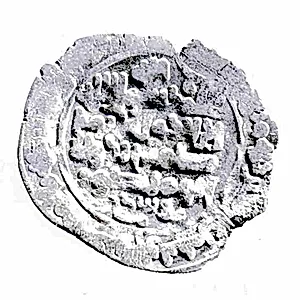
Medium
Silver
Classification
Coins
Department
Islamic Art
Museum
Metropolitan Museum of Art, New York, NY
Credit
Rogers Fund, 1939
Accession Number
39.40.127.150
Rights
Public Domain
Art Historical Context
This exquisite silver coin, struck in A.H. 367 (977–78 CE), hails from the Islamic world during a dynamic era of caliphal authority under the Abbasid dynasty, possibly amid Buyid influence. As a dirham—a standard silver currency—it exemplifies the precision of medieval Islamic minting, where hammered dies impressed intricate Arabic inscriptions onto thin silver blanks. These coins circulated widely across empires stretching from Spain to Central Asia, serving as vital links in bustling trade networks. The artistry lies in its calligraphy, a hallmark of Islamic numismatics. Eschewing figural imagery in favor of pious phrases, ruler's names, mint marks, and precise dates, it reflects aniconic principles and the era's reverence for the written word. Such details turned everyday money into miniature historical records, preserving glimpses of political legitimacy and economic vitality. Today, at the Metropolitan Museum of Art (acquired via the Rogers Fund in 1939), this unassuming artifact invites us to ponder the interconnected medieval world—where a single coin bridged merchants, scholars, and sultans, whispering tales of a golden age of Islamic civilization.