
Coin
Unknown Artist
A.H. 141–50/ 758–68 CE
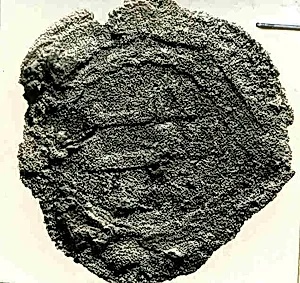
Medium
Copper
Classification
Coins
Department
Islamic Art
Museum
Metropolitan Museum of Art, New York, NY
Credit
Rogers Fund, 1939
Accession Number
39.40.127.623
Rights
Public Domain
Art Historical Context
This copper coin, struck during the early Abbasid Caliphate (A.H. 141–150 / 758–768 CE), offers a tangible glimpse into the bustling economy of the Islamic world just after the dynasty's rise to power in 750 CE. Minted under Caliph al-Mansur, who founded Baghdad as the new capital in 762 CE, it exemplifies the standardized coinage that facilitated trade across a vast empire stretching from Spain to Central Asia. As a *fals*—a low-denomination copper piece—the coin was essential for everyday transactions, reflecting the Abbasids' emphasis on administrative reform and economic stability following the Umayyad era. In the Department of Islamic Art, such coins highlight numismatics as a key medium of artistic expression. Crafted through die-striking techniques, they feature intricate Arabic inscriptions, often including the caliph's name, mint location, and Islamic phrases, blending calligraphy with symbolic authority. Without figurative imagery, per Islamic aniconism, these designs served as portable propaganda, affirming the ruler's legitimacy and the shahada. Today, acquired through the Rogers Fund in 1939, this artifact at the Metropolitan Museum of Art connects visitors to the ingenuity of 8th-century artisans, whose humble copper work powered one of history's greatest civilizations.