
Coin Weight
Unknown Artist
12th century
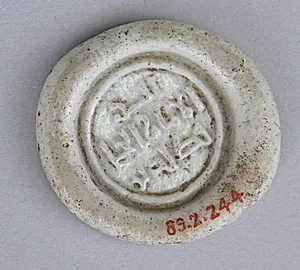
Medium
Glass; stamped
Dimensions
H. 1/4 in. (0.6 cm) Diam. 1 1/8 in. (2.9 cm) Wt. 0.21 oz. (5.95 g)
Classification
Glass
Department
Islamic Art
Museum
Metropolitan Museum of Art, New York, NY
Credit
Gift of Joseph W. Drexel, 1889
Accession Number
89.2.244
Rights
Public Domain
Tags
Art Historical Context
This delicate 12th-century coin, crafted from stamped glass, exemplifies the precision of Islamic metrology during the medieval period. Measuring just 1 1/8 inches in diameter and weighing a mere 0.21 ounces, it was designed to verify the exact weight of goldars in bustling trade hubs across the Islamic world. Donated to the Metropolitan Museum of Art in1889 by Joseph W Drexel, it now resides in the Islamic Art, highlighting everyday tools that underpinned a thriving economy. Glass was an ideal medium for these weights—durable, affordable, and amenable to sharp stamping techniques that impressed official markings, likely including Arabic inscriptions denoting weight standards. Produced in the Fatimid or Ayyubid eras, such artifacts reflect advanced craftsmanship in glassworking centers like Cairo or Damascus, where artisans fused utility with subtle artistry. Beyond function, this coin weight reveals the cultural emphasis on fair commerce and standardized measures in Islamic society, fostering trust in long-distance trade from the Mediterranean to India. A small marvel, it invites us to ponder the invisible networks that connected ancient civilizations.