
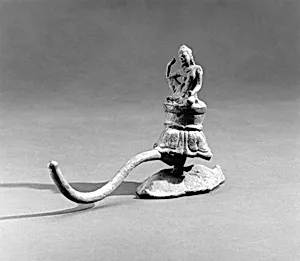
Container in the Form of a Lotus Surmounted by a Female Figure
Unknown Artist
ca. first half of the 12th century
Medium
Bronze
Dimensions
H. 2 1/16 in. (5.2 cm); W. 6 in. (15.2 cm)
Classification
Sculpture
Culture & Period
Thailand (or Cambodia?) · Angkor period
Department
Asian Art
Museum
Metropolitan Museum of Art, New York, NY
Credit
Gift of Steven Kossak, The Kronos Collections, 1992
Accession Number
1992.150.2
Rights
Public Domain
Tags
Art Historical Context
This elegant bronze sculpture, created in the first half of 12th century during the Angkor period, takes the form of a lotus blossom container crowned by a graceful female figure. Measuring just over five centimeters in height, the piece reflects the refined metalworking traditions of the Khmer Empire, which spanned regions of present-day Cambodia and Thailand. The lotus, a powerful symbol of purity and spiritual awakening in both Hindu and Buddhist traditions, serves as both the vessel’s shape and its decorative motif, while the female figure above likely represents a deity, attendant, or idealized feminine form common in Angkorian art. Such small-scale bronzes were often used in personal devotion or temple rituals, highlighting the period’s blend of religious devotion and artistic sophistication. The unknown artist skillfully balanced the container’s functional design with symbolic elements, capturing the elegance of the female form in a compact, portable object. Today housed in the Metropolitan Museum of Art’s Asian Art collection, this work offers visitors a glimpse into the rich cultural exchanges and artistic achievements of medieval Southeast Asia.