
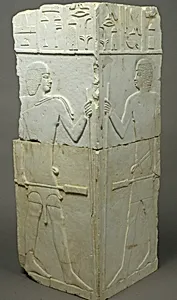
Corner of niche from the tomb of Akhtihotep
Unknown Artist
ca. 2575–2551 B.C.
Medium
Limestone, paint
Dimensions
H. 96.5 cm (38 in.)
Classification
False Door Niche block, Akhtihotep, corner
Period
Old Kingdom
Department
Egyptian Art
Museum
Metropolitan Museum of Art, New York, NY
Credit
Funds from Various Donors, and by exchange, 1958
Accession Number
58.123
Rights
Public Domain
Tags
Art Historical Context
This striking fragment, a corner of a niche from the tomb ofhtihotep, hails from Egypt's Old Kingdom, Dynasty 4 (ca. 2575–2551 B.C.), a age of pyramid-building pharaohs like Khufu Akhtihotep, likely a high-ranking official, had his mastaba tomb adorned with such architectural elements at Saqqara. These once housed statues of the deceased serving as "false doors" through which his ka—eternal spirit—could receive offerings. Carved from limestone and vividly painted, this 38-inch-high piece (96.5 cm) captures the essence of ancient Egyptian tomb art, blending sculpture and relief to bridge the living world and the afterlife. The artwork features carved male figures—possibly Akhtihotep or servants—accompanied by hieroglyphs, a hallmark of Old Kingdom precision. Artisans used sunken relief techniques, incising figures into the stone for sharp definition, then applying mineral-based paints in reds, blues, and golds that have partially endured. This method ensured durability against tomb humidity while allowing vibrant storytelling, with hieroglyphs naming the owner and invoking eternal sustenance. In Egyptian culture, such pieces were vital for immortality, magically providing food and protection forever. Displayed at the Metropolitan Museum of Art, this relic invites us to ponder Akhtihotep's world: a time when art wasn't mere decoration but a profound ritual for eternity.