
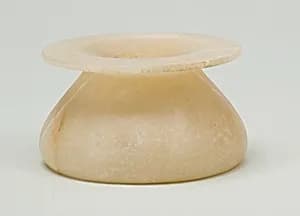
Cosmetic jar
Unknown Artist
ca. 1991–1450 B.C.
Medium
Travertine (Egyptian alabaster)
Dimensions
H. 4.5 cm × H. 7.5 cm (1 3/4 × 2 15/16 in.)
Classification
Cosmetic jar
Period
New Kingdom
Department
Egyptian Art
Museum
Metropolitan Museum of Art, New York, NY
Credit
Purchase, Edward S. Harkness Gift, 1926
Accession Number
26.7.1435
Rights
Public Domain
Tags
Art Historical Context
This delicate cosmetic jar, crafted around 1991–1450 B.C. during Egypt's New Kingdom (Dyn 18), exemplifies the refined artistry of one of ancient Egypt's golden ages. Made from travertine—known as Egyptian alabaster—this soft, translucent stone wasried near Hatnub and prized for its smooth texture and luminous quality, ideal for luxury vessels. Standing just 4.5 cm high and 7.5 cm wide, the jar's petite scale suggests it was a personal item, likely used to hold precious ointments, perfumes, or kohl eyeliner. In ancient Egyptian society, cosmetics were more than vanities; they held cultural and ritual significance. Both men and women applied them daily for beauty, sun protection, and symbolic renewal, often linking to beliefs in eternal youth and divine favor. Dynasty 18, the era of powerful pharaohs like Thutmose III and Amenhotep III, saw booming trade and craftsmanship, producing such jars in vast numbers for tombs and homes. Hollowed meticulously by hand, this jar showcases the stone carvers' skill in creating functional beauty without unnecessary decoration, emphasizing form and material. Acquired by The Metropolitan Museum of Art in 1926 through the Edward S. Harkness Gift, it offers a tangible glimpse into the intimate rituals of New Kingdom life.