
Cosmetic Spoon in the Shape of Swimming Woman Holding a Dish
Unknown Artist
ca. 1390–1352 B.C.
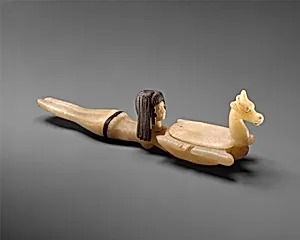
Medium
Travertine (Egyptian alabaster), steatite
Dimensions
L. 22.5 cm (8 7/8 in)
Classification
Cosmetic Spoon, Swimming Woman, Gazelle
Period
New Kingdom
Department
Egyptian Art
Museum
Metropolitan Museum of Art, New York, NY
Credit
Rogers Fund, 1926
Accession Number
26.2.47
Rights
Public Domain
Tags
Art Historical Context
This exquisite *Cosmetic Spoon in the Shape of Swimming Woman Holding a Dish* dates to around 1390–1352 B.C., from Egypt's New Kingdom, Dynasty 18—the era of pharaohs like Amenhotep III, when art flourished in celebration of beauty and divine harmony. Crafted from travertine (Egyptianaster), a soft, luminous stone prized for its translucency and ease of carving, with accents in steatite, 22.5 cm tool exemplifies the Egyptians' mastery of delicate stonework. Alabaster's creamy glow evoked purity and luxury, making it ideal for intimate beauty rituals. Shaped as a graceful woman gliding through water while cradling a dish—likely for lotions, oils, or kohl eye makeup—the spoon blends utility with whimsy. These cosmetic utensils were everyday treasures for elite women, symbolizing grace, fertility, and the Nile's life-giving flow. The swimmer's fluid pose captures motion in stone, highlighting New Kingdom sculptors' skill in naturalistic forms amid stylized ideals of beauty. Housed in the Metropolitan Museum of Art's Egyptian Art Department (Rogers Fund, 1926), this piece offers a window into ancient Egypt's refined daily life, where art elevated the mundane into the magical. Imagine dipping into scented balms with such elegance—timeless allure from the sands of time!