
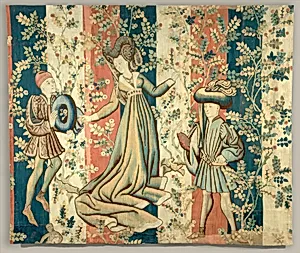
Courtiers in a Rose Garden: A Lady and Two Gentlemen
Unknown Artist
ca. 1440–50
Medium
Wool warp; wool, silk, metallic weft yarns
Dimensions
Overall: 9 ft. 5 3/4 in. x 10 ft. 8 in. (288.9 x 325.1 cm)
Classification
Textiles-Tapestries
Culture
South Netherlandish
Department
Medieval Art
Museum
Metropolitan Museum of Art, New York, NY
Credit
Rogers Fund, 1909
Accession Number
09.137.2
Rights
Public Domain
Tags
Art Historical Context
Step into the enchanting world of 15th-century South Netherlandish tapestry weaving with *Courtiers in a Rose: A Lady and Two*, created by an unknown artist around 1440–50. This monumental textile, measuring nearly 10 by 9 feet, was woven on a wool warp using vibrant wool, silk, and weft yarns, showcasing the exquisite craftsmanship of medieval looms in the Low Countries. Acquired through the Rogers Fund in 1909, it graces the Metropolitan Museum of Art's Medieval Art collection. The scene unfolds in a lush rose garden, where an elegant lady converses with two finely dressed gentlemen—courtiers embodying the ideals of chivalric romance and courtly love. Playful cats and monkeys scamper amid blooming roses, adding whimsy and symbolism to this idyllic tableau. Such tapestries, often called *millefleurs* for their "thousand flowers" backgrounds, decorated noble halls, providing both insulation and visual splendor while celebrating aristocratic leisure. Artistically, the metallic threads catch the light, mimicking jewelry and brocade, while the dense weave captures intricate details from foliage to fur. These luxurious hangings were status symbols for Europe's elite, reflecting the economic boom of Flemish weaving centers like Arras and Brussels, and offering a vivid glimpse into medieval daily life and fantasy.