
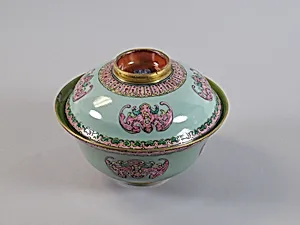
Covered bowl with bats
Unknown Artist
late 18th–early 19th century
Medium
Porcelain painted in polychrome enamels over light green glaze (Jingdezhen ware)
Dimensions
H. 4 1/2 in. (11.4 cm); Diam. 6 in. (15.2 cm)
Classification
Ceramics
Culture & Period
China · Qing dynasty (1644–1911), Jiaqing period (1796–1820)
Department
Asian Art
Museum
Metropolitan Museum of Art, New York, NY
Credit
Purchase by subscription, 1879
Accession Number
79.2.1308a, b
Rights
Public Domain
Tags
Art Historical Context
This elegant covered bowl, crafted in Jingdezhen porcelain during China's Qing dynasty Jiaqing period (1796–1820), the pinnacle of imperial ceramic artistry. Produced at the renowned kilns of Jingdezhen—known as the porcelain capital of the world—the bowl features a delicate light green glaze as its base, adorned with vibrant polychrome enamels. Theseglaze colors, fired at lower temperatures, allowed artisans to achieve intricate, multi-hued designs that pop against the subtle green ground. Measuring just 4½ inches high and 6 inches in diameter, it's a compact lidded vessel likely used for serving tea, sweets, or medicinal herbs in elite households. The motif of bats soaring across the surface holds deep cultural resonance in Chinese tradition. Bats (fu in Mandarin) are auspicious symbols of good fortune, happiness, and longevity, their homophone evoking blessings like "fu" for prosperity. During the Jiaqing reign, such optimistic imagery reflected the era's emphasis on harmony and abundance amid political stability. Acquired by subscription in 1879 for the Metropolitan Museum of Art, this anonymous masterpiece showcases the technical virtuosity of Qing potters, blending functionality with symbolic elegance for everyday luxury.