
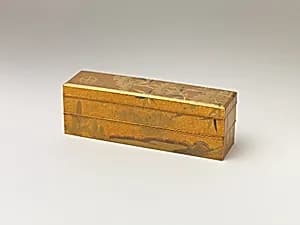
Covered Box with Design of Pine, Bamboo, and Cherry Blossom
Unknown Artist
19th century
Medium
Sprinkled gold on lacquer (maki-e)
Dimensions
H. 2 3/8 in. (6 cm); W. 6 13/16 in. (17.3 cm); D. 1 3/4 in. (4.4 cm)
Classification
Lacquer
Culture & Period
Japan · Edo period (1615–1868)
Department
Asian Art
Museum
Metropolitan Museum of Art, New York, NY
Credit
Frederick C. Hewitt Fund, 1910
Accession Number
10.7.11
Rights
Public Domain
Tags
Art Historical Context
This delicate covered box from Japan's Edo period (16151868), crafted in the 19th, showcases the refined artistry of lacquerware through its maki-e technique. Sprled gold powder is applied over layers of lacquer to create shimmering designs of pine, bamboo and cherry blossoms—nature's enduring symbols rendered in exquisite detail. Measuring just 2⅜ inches high, 6⅞ inches wide, and 1¾ inches deep, likely served as a luxurious container for cosmetics, medicines, or small treasures, reflecting the era's blend of functionality and opulence. Maki-e, meaning "sprinkled picture," was a hallmark of Japanese lacquer craftsmanship, perfected during the Edo period when peace and prosperity fueled demand for decorative household goods among merchants and samurai. The gold flecks catch the light, evoking a sense of movement and depth, while the motifs draw from traditional themes: pine for longevity and steadfastness, bamboo for resilience and purity, and cherry blossoms for the transient beauty of life (mono no aware). These elements embody core Japanese aesthetics, celebrating nature's harmony and impermanence. Acquired through the Frederick C. Hewitt Fund in 1910, this piece from the Metropolitan Museum of Art's Asian Art collection highlights lacquer's status as a pinnacle of Edo innovation, rivaling ceramics and textiles in cultural prestige. A true gem for admirers of subtlety and skill!