
Covered Jar with Thousand Flowers (Millefleurs) Design
Qing dynasty (1644–1911), probably Jiaqing period (1796–1820)
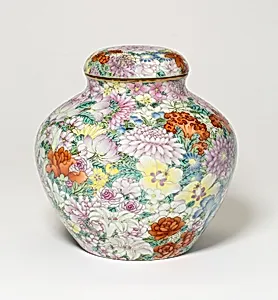
Medium
Porcelain painted in overglaze enamels
Dimensions
15.5 × 15.4 cm (6 1/8 × 6 1/16 in.); Diam.: 15.4 cm (6 1/16 in.)
Classification
porcelain
Department
Arts of Asia
Museum
Art Institute of Chicago
Accession Number
42381
Rights
Public Domain
Art Historical Context
This exquisite covered jar, adorned with a Millefleurs (thousand) design, hails from China's Qing dynasty, likely the Jiaqing period (1796–1820). Standing just over 6 inches tall, this porcelain vessel exemplifies the era's masterful craftsmanship from imperial kilns, where potters produced wares for both domestic elite and international trade. The compact, bulbous form with its fitted lid made it ideal for storing precious spices, teas, or cosmetics, blending utility with opulent decoration. The jar's surface bursts with vibrant overglaze enamels—colors applied atop the fired glaze and refired at lower temperatures to achieve luminous hues of pink, green, yellow, and blue. This technique, perfected during the Qing, allowed for intricate, layered motifs like the dense floral patterns here, evoking abundance and harmony in nature. The Millefleurs style, dense with blossoms and foliage, draws from traditional Chinese motifs while echoing global influences, highlighting porcelain's role as a cultural ambassador. Housed in the Art Institute of Chicago's Arts of Asia department, this anonymous masterpiece captures the Qing's porcelain pinnacle, a testament to technical innovation and aesthetic refinement that captivated collectors worldwide.
About the Artist
Unknown
The artist designated as "Unknown" in our virtual museum's collection exemplifies a poignant chapter in art history: creators whose identities have faded into obscurity despite the enduring power of their work. With only one known artwork attributed to them in our holdings, this figure represents countless anonymous hands that shaped visual culture across centuries. Museums worldwide, including th...