
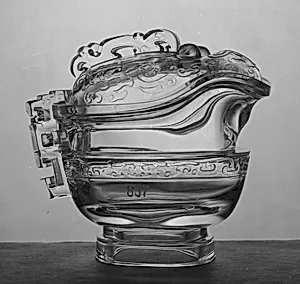
清中期 仿古水晶觥|Covered vessel in the shape of an ancient ritual bronze
Unknown Artist
18th–19th century
Medium
Rock crystal
Dimensions
H. 4 1/2 in. (11.4 cm); W. 4 5/8 in. (11.7 cm)
Classification
Hardstone
Culture & Period
China · Qing dynasty (1644–1911)
Department
Asian Art
Museum
Metropolitan Museum of Art, New York, NY
Credit
Gift of Heber R. Bishop, 1902
Accession Number
02.18.837a, b
Rights
Public Domain
Art Historical Context
This exquisite covered vessel, crafted from translucent rock crystal during China's Qing dynasty (18th–19th century masterfully imitates the form of an ancient ritual bronze *gu*—a wine vessel used in ceremonial rites as early as the Shang and Zhou dynasties. Standing just 4½ inches tall, its compact size belies the monumental prestige it evokes, blending reverence for antiquity with imperial opulence. Qing artisans often replicated archaic bronzes in precious hardstones like crystal, elevating them from functional ritual objects to symbols of scholarly refinement and connoisseurship. Carving rock crystal demanded extraordinary skill, as its hardness rivals that of quartz, requiring diamond-tipped tools to achieve the vessel's smooth, luminous surfaces and intricate lid. The material's clarity mimics the patina of aged bronze while adding a jewel-like glow, highlighting the Qing court's fascination with archaism (*fugu*). Such pieces were prized in elite collections, showcasing technical virtuosity and cultural continuity. Today, this gift from Heber R. Bishop graces the Metropolitan Museum of Art's Asian Art collection, inviting visitors to ponder how Qing craftsmen bridged millennia through stone, transforming a bronze echo into a crystalline marvel.