
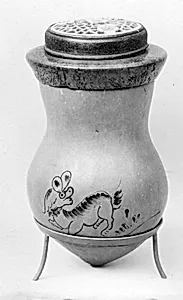
Cricket cage
Unknown Artist
18th–19th century
Medium
Gourd, ivory
Dimensions
H. 3 3/4 in. (9.5 cm); Diam. 2 1/8 in. (5.4 cm)
Classification
Cricket cages
Culture & Period
China · Qing dynasty (1644–1911)
Department
Asian Art
Museum
Metropolitan Museum of Art, New York, NY
Credit
Gift of George D. Pratt, 1928
Accession Number
28.186.29
Rights
Public Domain
Tags
Art Historical Context
This delicate cricket cage, crafted from a gourd and ivory during China's Qing dynasty (16441911), exemplifies the artistry of 18th–19th leisure objects. Measuring just 3¾ inches high and 2⅛ inches in diameter, its petite scale allowed for easy portability, fitting neatly a gentleman's sleeve or pocket. The natural gourd forms the body—lightweight and resonant, ideal for a pet cricket—while accents likely provided intricate carvings or fittings, showcasing the era's mastery of miniature sculpture. In Qing China, keeping crickets as pets was a beloved pastime among scholars and elites, symbolizing harmony with nature and appreciation for subtle sounds. These insects, prized for their chirping melodies or spirited fights, were status symbols, with elaborate cages reflecting connoisseurship. This example highlights the cultural fusion of functionality and aesthetics, where everyday materials were transformed into objects of beauty. Gifted to the Metropolitan Museum of Art in 1928 by George D. Pratt, it offers a glimpse into the poetic world of xiyin, or "delightful sounds," bridging art, nature, and tradition.