
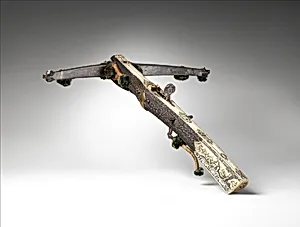
Crossbow (Halbe Rüstung) with Winder (Cranequin)
dated 1742
Medium
Steel, wood, staghorn, copper alloy, hemp, wool, gold, iron alloy
Dimensions
L. of crossbow, 28 13/16 in. (73.2 cm); W. of crossbow, 24 15/16 in. (63.3 cm); Wt. of crossbow, 10 lb. 7 oz. (4,817 g); L. of cranequin (without crank), 14 1/4 in. (36.2 cm); L. of crank, 10 3/4 in. (27.3 cm)
Classification
Archery Equipment-Crossbows
Culture
German, Dresden
Department
Arms and Armor
Museum
Metropolitan Museum of Art, New York, NY
Credit
Purchase, Louis V. Bell Fund and Bequest of Stephen V. Grancsay, by exchange, 1985
Accession Number
1985.248a, b
Rights
Public Domain
Tags
About this artwork
This magnificent crossbow with its mechanical winder (cranequin) represents the pinnacle of eighteenth-century arms manufacturing, combining lethal functionality with decorative artistry. Dated 1742 and crafted by Johann Gottfried Hänisch the Elder, this Halbe Rüstung exemplifies the German tradition of producing firearms and crossbows as luxury objects for aristocratic patrons. By the eighteenth century, crossbows had long ceased being frontline military weapons, but they remained valued for hu...