
Cruet
Unknown Artist
ca. 1765
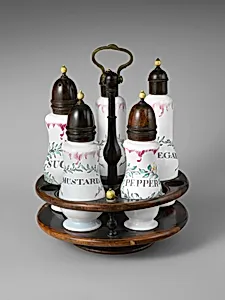
Medium
Opaque glass with enamel decoration
Dimensions
H. 7 7/8 in. (20 cm); Diam. 7 1/8 in. (18.1 cm)
Classification
Cruet
Culture
British
Department
The American Wing
Museum
Metropolitan Museum of Art, New York, NY
Credit
Bequest of Mrs. J. Insley Blair, 1951
Accession Number
52.77.19a–k
Rights
Public Domain
Art Historical Context
Step into the refined world of 18th British dining with this elegant cruet, dating to around 1765. Crafted by an unknown artist, this small vessel—standing 7⅞ inches tall and 7⅛ inches in diameter—was designed to hold oil, vinegar or condiments, often as part of a matching set gracing the tables of affluent households. Its British origins reflect the Georgian era's emphasis on luxury tableware, where such pieces symbolized hospitality and social status during a time of expanding trade and colonial influence. The cruet's opaque glass body, adorned with colorful enamel decoration, showcases advanced glassmaking techniques of the period. Opaque glass, resembling porcelain in its milky translucence, was a popular innovation that mimicked costlier materials, while the enamel—fired pigments applied in intricate patterns—added vibrant, durable motifs like florals or geometrics. This combination made it both functional and visually striking, blending utility with artistry. Housed in The Metropolitan Museum of Art's American Wing and bequeathed by Mrs. J. Insley Blair in 1951, this cruet highlights transatlantic exchanges, likely imported to America by colonial elites. It offers a glimpse into everyday elegance, inviting us to savor the craftsmanship that elevated the ordinary meal into a display of taste.