
Cup
early 19th century
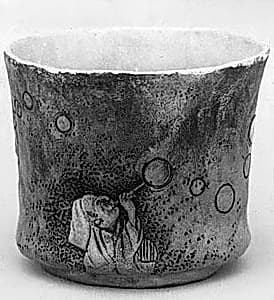
Medium
Pottery, unglazed and decorated in relief
Dimensions
H. 2 1/2 in. (6.4 cm)
Classification
Ceramics
Culture & Period
Japan · Edo period (1615–1868)
Department
Asian Art
Museum
Metropolitan Museum of Art, New York, NY
Credit
Edward C. Moore Collection, Bequest of Edward C. Moore, 1891
Accession Number
91.1.300
Rights
Public Domain
Tags
Art Historical Context
This delicate cup, crafted by the Japanese potter Koren in the 19th century during the Edo period (161–1868), exemplifies refined artistry of Japanese ceramics. Standing just 2½ inches (6.4 cm) tall, it belongs to the vibrant world of unglazed pottery, a medium prized for its earthy tactility and subtle aesthetic. The Edo era, a time of relative peace and urban flourishing, saw potters experimenting with everyday objects like this one, transforming functional items into subtle expressions of wit and beauty. The cup's surface is adorned with relief decoration—raised motifs of men and bubbles—likely evoking playful scenes of leisure or bathhouse revelry, common in Edo popular culture. Unglazed earthenware allowed the natural clay tones to shine, while the incised relief technique added depth and shadow, inviting touch and close inspection. Such pieces highlight Japan's mastery of low-fired ceramics, where form met narrative charm without the gloss of enamel. Part of the Edward C. Moore Collection bequeathed to the Metropolitan Museum of Art in 1891, this cup offers a window into Edo Japan's everyday elegance, reminding us how even a humble vessel could capture the joy of fleeting moments like rising bubbles.