
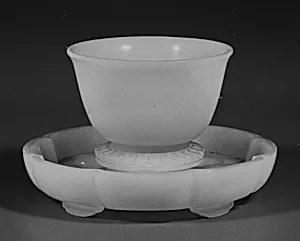
清中期 玉杯|Cup and saucer
Unknown Artist
late 18th–early 19th century
Medium
Jade (nephrite)
Dimensions
H. (incl. stand) 2 7/16 in. (6.2 cm) a. Diam. 4 1/8 in. (10.5 cm); b. Diam. 2 11/16 in. (6.8 cm)
Classification
Jade
Culture & Period
China · Qing dynasty (1644–1911)
Department
Asian Art
Museum
Metropolitan Museum of Art, New York, NY
Credit
Alfred W. Hoyt Collection, Bequest of Rosina H. Hoppin, 1965
Accession Number
65.86.108a, b
Rights
Public Domain
Art Historical Context
This exquisite jade cup and saucer, crafted from nephrite during China's Qing dynasty (late 18th–early 19th century), exemplifies the imperial era's mastery of luxury craftsmanship. Produced in the mid-Qing period, likely under the Qianlong or Jiaqing emperors, such objects were symbols of refinement and status, often reserved for elite connoisseurs or courtly rituals. Nephrite jade, prized for its creamy white to pale green hues and legendary durability, was quarried from regions like Hetian in Xinjiang, then meticulously carved into functional yet artistic forms. The cup stands just 2 7/16 inches high (including its stand), with diameters of 4 1/8 inches for the saucer and 2 11/16 inches for the cup—perfectly scaled for intimate tea ceremonies that embodied Confucian harmony and hospitality. Jade's cultural significance in China runs deep: revered since antiquity as a "stone of heaven," it symbolized purity, immortality, and moral virtue. Qing artisans employed delicate techniques like incising, drilling, and polishing to achieve translucent translucency and subtle luster, transforming raw stone into objects that blurred the line between utility and art. This piece, from the Alfred W. Hoyt Collection at The Metropolitan Museum of Art, invites visitors to appreciate how everyday rituals elevated to aesthetic splendor, reflecting the dynasty's opulent patronage of the arts.