
Cup plate
1830–35
Medium
Pressed glass
Dimensions
Diam.: 8.7 cm (3 7/16 in.)
Classification
plate (general, dish)
Department
Arts of the Americas
Museum
Art Institute of Chicago
Accession Number
83362
Rights
Public Domain
Art Historical Context
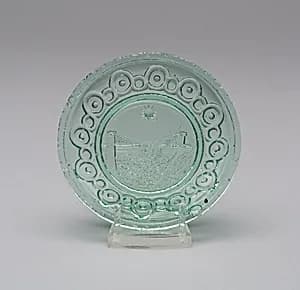
This delicate cup plate, crafted from pressed glass around 1830–35, exemplifies early American ingenuity in everyday household objects. Measuring just 3 7/16 inches in, it was designed to sit beneath a teacup, protecting wooden tables from heat, drips, and scratches during the popular tea-drinking rituals of the antebellum era. Produced by an unknown artisan or factory, its small scale and sturdy form made it a practical yet elegant addition to middle-class homes. The pressed glass technique, introduced in the United States in the 1820s, revolutionized glassmaking by allowing molds to create intricate patterns quickly and affordably—far surpassing hand-blown methods. This innovation, centered in New England factories, democratized decorative tableware, reflecting the young nation's growing industrial prowess and taste for refined domesticity. Housed in the Art Institute of Chicago's Arts of the Americas department, this plate highlights how functional items became subtle expressions of cultural aspiration in 19th-century America. Though its specific pattern remains unnoted, such pieces often featured motifs like eagles or florals, symbolizing patriotism and nature. A charming survivor of daily life, it invites us to ponder the unsung beauty in our ancestors' routines.