
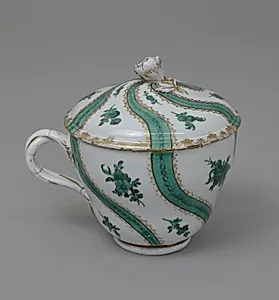
Cup with cover
ca. 1760–70
Medium
Porcelain
Dimensions
Height: 4 1/4 in. (10.8 cm)
Classification
Ceramics-Porcelain
Culture
German, Meissen
Department
European Sculpture and Decorative Arts
Museum
Metropolitan Museum of Art, New York, NY
Credit
Gift of Alfred Duane Pell, 1902
Accession Number
02.6.220a, b
Rights
Public Domain
Tags
Art Historical Context
Step into the elegant world of 18th European porcelain with this delicate *Cup with Cover* from Meissen Manufactory created around 1760–70. Standing just 4¼ inches (10.8 cm) tall, this petite porcelain vessel exemplifies the German factory's mastery of hard-p porcelain—a technical breakthrough that allowed Europe to rival the translucent beauty of Chinese imports. Founded in 1710 near Dresden, Meissen was the first produce true porcelain on the continent, marking a pivotal moment in decorative arts history. Adorned with floral motifs, as suggested by its tags, the cup reflects the exuberant Rococo style popular in the mid-18th century. Artisans hand-painted intricate flowers using enamel colors and gold accents, fired at high temperatures to achieve lasting vibrancy on the gleaming white body. Such pieces were luxury tableware for the aristocracy, symbolizing refinement and wealth amid the opulent courts of Europe. Gifted to the Metropolitan Museum of Art in 1902 by Alfred Duane Pell, this cup invites us to appreciate Meissen's enduring legacy: blending scientific innovation with artistic whimsy, it transformed everyday objects into treasures that still captivate today.
About the Artist
Meissen Manufactory · 1710–present
The Meissen Manufactory, established on June 6, 1710, by Augustus the Strong, Elector of Saxony and King of Poland, marked the dawn of true hard-paste porcelain production in Europe. Nestled at Albrechtsburg Castle in Meissen near Dresden, the Royal Polish and Electoral Saxon Porcelain Manufactory arose from alchemical experiments begun in 1708 by physicist Ehrenfried Walther von Tschirnhaus and p...