
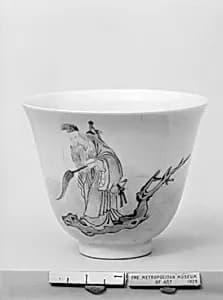
Cup with Lü Dongbin (one of the Eight Immortals)
Unknown Artist
late 18th–early 19th century
Medium
Porcelain painted in overglaze polychrome enamels (Jingdezhen ware)
Dimensions
H. 2 1/4 in. (5.7 cm); Diam. 2 5/8 in. (6.7 cm)
Classification
Ceramics
Culture & Period
China · Qing dynasty (1644–1911)
Department
Asian Art
Museum
Metropolitan Museum of Art, New York, NY
Credit
Edward C. Moore Collection, Bequest of Edward C. Moore, 1891
Accession Number
91.1.404
Rights
Public Domain
Tags
Art Historical Context
This exquisite porcelain cup, crafted in Jingdezhen—the renowned "porcelain capital" of China—depicts Lü Dongbin, one of the Eight Immortals from Taoist mythology. Dating to the late 18th or early 19th century during the Qing dynasty (1644–1911), the small vessel (just 2¼ inches tall) showcases the era's mastery of overglaze polychrome enamels. These vibrant, multi-colored paints were applied over the fired glaze and refired at lower temperatures, allowing for intricate details and a luminous finish that captured the imagination of collectors worldwide. Lü Dongbin, often portrayed as a sword-wielding scholar immortal, embodies themes of spiritual enlightenment, longevity, and protection against evil in Chinese folklore. The Eight Immortals, a popular motif in Qing art, symbolized harmony and the pursuit of immortality, gracing everything from ceramics to temple decorations. Jingdezhen ware like this was exported via maritime trade, reflecting China's cultural influence and technical prowess in ceramics. Its diminutive size suggests intimate use—perhaps for tea ceremonies or as a scholar's desk accessory—highlighting the Qing court's appreciation for refined, everyday luxury. Now in the Metropolitan Museum of Art's Edward C. Moore Collection, this cup invites us to ponder the blend of artistry, spirituality, and daily life in imperial China.