
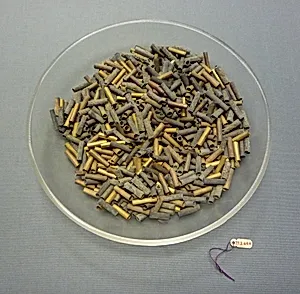
Cylinder Beads of Silver
Unknown Artist
ca. 1479–1458 B.C.
Medium
Silver
Dimensions
length of beads 1.2-1.5 cm (1/2–9/16 in)
Classification
Beads, cylinder
Period
New Kingdom
Department
Egyptian Art
Museum
Metropolitan Museum of Art, New York, NY
Credit
Rogers Fund, 1927
Accession Number
27.3.445
Rights
Public Domain
Art Historical Context
These delicate **Cylinder Beads of Silver hail from Egypt's New Kingdom, specifically Dynasty 18 (ca. 1479–1458 B.C.), a golden era of imperial power and artistic splendor under pharaohs like Hatsheps and Thutmose III. Crafted from pure silver—a rare and precious metal sourced through trade or Nubian mines—these tiny beads, measuring just 1.2–1.5 cm in length, exemplify the exquisite jewelry artistry of ancient Egypt. Silver held immense cultural value, symbolizing purity and lunar divinity, often reserved for elite adornments like necklaces, bracelets, or broad collars worn by nobility. The cylindrical shape was a hallmark of Egyptian beadwork, allowing them to be strung seamlessly while evoking the form of protective amulets or seals. Techniques likely involved hammering, drawing, and polishing the soft metal into precise, uniform segments, showcasing the skilled metallurgy of the period. Acquired through the Rogers Fund in 1927, these beads now grace the Metropolitan Museum of Art's Egyptian Art collection, offering a tangible glimpse into the opulent daily lives of New Kingdom elites. Though small, they whisper tales of prosperity, piety, and craftsmanship from one of history's most innovative civilizations.