
Cylindrical Vessel
250–900 CE
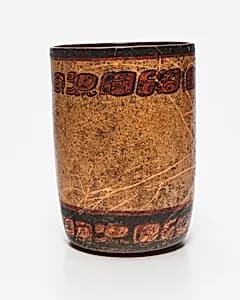
Medium
Earthenware and pigment
Dimensions
18.3 × 113 × 11.4 cm (7 1/4 × 44 1/2 × 4 1/2 in.)
Classification
earthenware
Department
Arts of the Americas
Museum
Art Institute of Chicago
Accession Number
148344
Rights
Public Domain
Art Historical Context
This elegant cylindrical vessel, created by Maya artists between 250 and 900 CE, exemplifies the refined ceramic traditions of the Classic Maya period. During this era, Maya civilization flourished across Mesoamerica, producing works that blended daily utility with profound ritual and symbolic meaning. Such vessels were often crafted for elite use, serving as containers for cacao beverages in ceremonies or as valued offerings in tombs. Measuring over three feet in length, the form highlights the technical skill required to shape and fire large earthenware objects. The addition of pigment indicates a painted surface, a hallmark of Maya ceramics where slips and mineral-based colors were applied before firing to create durable, vibrant designs. These techniques allowed artists to convey complex narratives, calendars, or hieroglyphic texts that connected the living with ancestors and deities. Today housed in the Art Institute of Chicago’s Arts of the Americas collection, this vessel offers visitors a tangible link to Maya ingenuity and worldview. Its graceful proportions and surviving pigmentation remind us of the culture’s deep appreciation for beauty, craftsmanship, and the sacred role of art in daily and ceremonial life.