
Dagger
Unknown Artist
second half 17th century
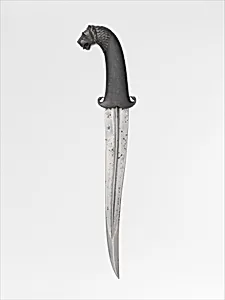
Medium
Steel, iron, silver, copper alloy
Dimensions
H. 14 3/16 in. (36 cm); W. 3 1/4 in. (8.3 cm); Wt. 12.8 oz. (362.9 g)
Classification
Daggers
Culture
Indian, Deccan
Department
Arms and Armor
Museum
Metropolitan Museum of Art, New York, NY
Credit
Purchase, The Sulzberger Foundation Inc. Gift, 1994
Accession Number
1994.26
Rights
Public Domain
Tags
Art Historical Context
This exquisite dagger from the Deccan of India, crafted in the second half of 17th century, the fusion of lethal functionality and opulent artistry in South Asian arms. Measuring 14 3/16 inches in height and weighing 12.8 ounces, it features a blade of steel and iron, enhanced with silver and copper alloy decorative embellishments. The lion motifs, a recurring tag associated with this piece, likely the hilt or guard, symbolizing power,, and royal authority—emblems deeply rooted in Indian iconography. Hailing from the Deccan Sultanates, such as Bijapur or Golconda, this dagger emerged during a vibrant era of cultural synthesis under Islamic rule, blending Persian influences with local Hindu traditions. Deccani armorers were renowned for their mastery of metalworking techniques, including intricate inlays and alloys that elevated weapons into status symbols for warriors and nobility. Acquired by the Metropolitan Museum of Art through the Sulzberger Foundation in 1994, it now resides in the Arms and Armor department. Beyond its role as a combat tool, the dagger highlights the Deccan's legacy in fine craftsmanship, where everyday steel transformed into shimmering treasures. Visitors will appreciate how such objects bridged utility and aesthetics, reflecting the turbulent yet artistically fertile world of 17th-century India.