
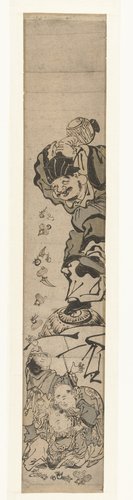
Daikoku en drie jongetjes
ca. 1770 - ca. 1780
Medium
color woodcut
Dimensions
697; 121
Rights
Public Domain
About this artwork
blad: hoogte 697 mm (hashira-e) x breedte 121 mm
Art Historical Context
**Daikoku and Three Boys** by Katsukawa Shunshōca. 1770–1780) captures a whimsical moment from Japanese folklore in this striking color woodcut. Shunshō, a master of the ukiyo-e—meaning "pictures of the floating"—was renowned for his lively depictions of actors and everyday life during Japan's Edo period. Here, the benevolent god Daikoku, one of the Seven Lucky symbolizing wealth and prosperity, appears playfully engaged with three boys. Often portrayed with his magical mallet and rice bale, Daikoku embodies good fortune, making this scene a charming nod to cultural beliefs in abundance and joy. Printed as a *hashira-e* (pillar print), the artwork's tall, narrow format—measuring 697 mm high by 121 mm wide—was designed to hang gracefully on wooden pillars in homes or teahouses. This ukiyo-e technique involved carving woodblocks for each color layer, allowing vibrant hues and fine details to emerge through precise registration. Shunshō's skill shines in the dynamic composition, filling the vertical space with movement and warmth. Produced amid the flourishing woodblock print culture of 18th-century Japan, this piece reflects ukiyo-e's role in democratizing art for the urban merchant class. It invites viewers to ponder themes of prosperity and childhood innocence, offering a delightful glimpse into Edo-era aesthetics and spirituality.