
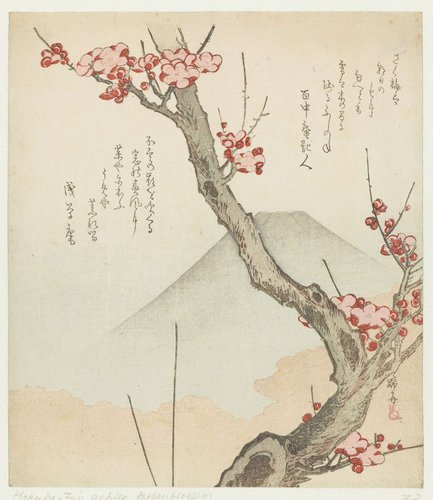
De berg Fuji en een bloeiende pruim
c. 1825
Medium
nishikie, with metallic pigments and blindprinting
Dimensions
213; 186
Rights
Public Domain
About this artwork
Legaat van J.A. Bierens de Haan, Amsterdam
Art Historical Context
Behold the delicate beauty of *De berg Fuji en een bloende pruim* (Mount Fuji and a Bloom Plum), a circa 5 nishikieblock print by Teis Hokuba, a prominent ukiyo-e artist pupil of the legendary Katsushika Hokusai. This intimate work, measuring just 213 mm high by 186 mm wide, captures the snow-capped peak of Mount Fuji alongside delicate plum blossoms in full bloom—a timeless motif evoking Japan's natural splendor during the late Edo period. okuba's mastery shines through innovative techniques: nishik, or "brocade prints," employed vibrant multi-color woodblocks for lifelike hues, while metallic pigments added a shimmering glow, mimicking morning dew or frost on the petals and slopes. Blindprinting (gauffrage) introduced subtle embossed textures, enhancing depth without ink, a hallmark of refined ukiyo-e craftsmanship that elevated prints from mere illustrations to tactile art objects. Sacred to Shinto beliefs, Mount Fuji symbolized enduring strength, while plum blossoms heralded spring's renewal amid winter's chill, resonating with themes of resilience in Japanese culture. Generously bequeathed by J.A. Bierens de Haan of Amsterdam, this gem preserves Hokuba's elegant legacy for modern admirers.
About the Artist
Teisai Hokuba · 1771–1844
Teisai Hokuba (1771–1844) was a Japanese artist of the Edo period who worked in the tradition of ukiyo-e, the celebrated school of woodblock prints and paintings that depicted the floating world of urban pleasure, theater, landscape, and daily life. A devoted pupil of Katsushika Hokusai — one of the towering figures in the history of Japanese art — Hokuba adopted the prefix of his master's name as...