
De dood van de heilige Scholastica
1739 - 1780
Medium
etching
Dimensions
579; 345
Rights
Public Domain
About this artwork
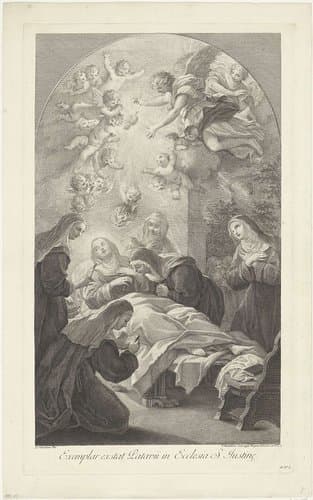
De ziel van Scholastica (in de gedaante van een duif) verlaat haar lichaam. Scholastica ligt gekleed als een benedictijner non op een bed. Rond het bed zijn verschillende nonnen in gebed. Boven zweven putti. Genummerd rechtsonder: AB No. 2.
Art Historical Context
**De Dood van de Heiligeastica** is a poignant etching by Francesco Bartol, the renowned 18th-century Italian engr (1728–1815), created sometime between 1739 and 1780. Measuring an impressive 579 mm high by 345 mm wide, this print captures a sacred moment from the life of Saint Scholastica the twin sister of Saint Benedict andess of nuns. Dressed in Benedictine habit, she lies on her deathbed as her soul departs in the form of a dove—a traditional Christian symbol of the spirit's release. Surrounding her are praying nuns, while playful putti (cherubic figures) hover above, blending solemnity with heavenly joy. Numbered "AB No. 2" in the bottom right, it likely belongs to a devotional series. Etching, Bartolozzi's favored medium, allowed for intricate lines and tonal depth through acid-etched copper plates, making complex religious scenes accessible via affordable prints. A master of stipple and line techniques, he popularized such works across Europe, bridging Baroque drama with emerging Rococo elegance. This piece reflects the Counter-Reformation's emphasis on vivid saintly narratives to inspire faith. In a era of monastic devotion, the artwork underscores Scholastica's legacy of prayerful sisterhood, offering visitors a window into 18th-century Catholic piety and the artistry that immortalized it. (198 words)
About the Artist
Francesco Bartolozzi · 1727–1815
Francesco Bartolozzi (1727–1815) was an Italian engraver whose most productive period was spent in London, where he became the leading exponent of stipple engraving and a founding member of the Royal Academy. Born in Florence and trained first as a painter before turning to engraving in Venice, he established his reputation in Rome before being recruited by the English Royal Librarian Richard Dalt...