
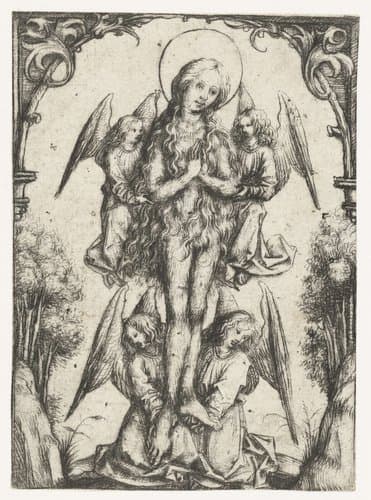
De elevatie van de H. Maria Magdalena met vier engelen
1488 - 1492
Medium
drypoint
Dimensions
123; 89
Rights
Public Domain
About this artwork
height 123 mm x width 89 mm
Art Historical Context
Behold the delicate *De elevatie van de H Maria Magdalena met vier eng* (The Elevation of Saint Mary Magdalene Four Angels), a gem from the anonymous Meester van het Amsterdamseinet, created between 1488 and 1492. This tiny masterpiece, measuring just 123 mm high by 89 mm wide, captures a mystical moment from Christian devotion: Mary Magdalene, the repentant saint, is gently lifted heavenward by four tender angels. Working in the Late Gothic tradition of the Northern Netherlands, the Master—named for a prized collection of drawings and prints once housed in Amsterdam—excelled in intimate, cabinet-sized works that invited personal contemplation. What sets this piece apart is its pioneering use of drypoint, an innovative intaglio technique where the artist scratches directly into a copper plate with a sharp tool, producing richly textured, velvety lines without acid etching. Emerging in the late 15th century, drypoint was rare and experimental, allowing for spontaneous, expressive strokes that evoke ethereal grace in the angels' flowing drapery and Magdalene's serene gaze. As one of the earliest surviving drypoints, it bridges medieval piety and the dawning Northern Renaissance, showcasing technical bravura on a miniature scale. In an era of fervent religious art, this print would have served as a portable aid for private prayer, reflecting the era's growing demand for affordable devotional images amid Haarlem's thriving print culture. Its survival underscores the Master's enduring legacy in preserving Late Gothic finesse amid artistic transition.