
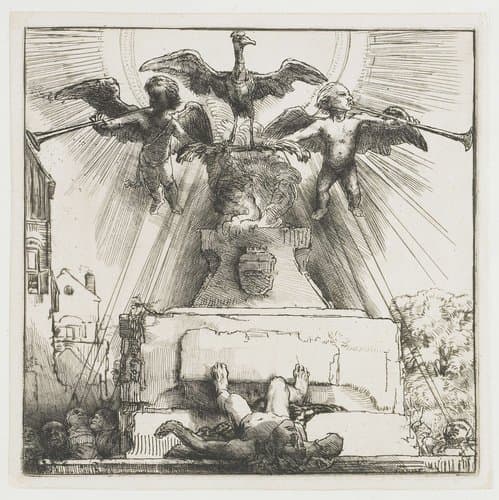
De feniks of het omvergeworpen standbeeld
Medium
etching
Dimensions
180; 183
Rights
Public Domain
About this artwork
verzamelaarsmerk, verso linksonder, gestempeld: Lugt 240
Art Historical Context
**De feniks of het omvergeworpen standbeeld (The Phoenix or the Overthrown Statue)** Created by Rembrandt van Rijn 1658, this measures a modest 180 × 183 mm, capturing dramatic scene of rebellion and renewal. The title evokes the mythical phoenix rising from ashes alongside a toppled statue, symbolizing the triumph over tyranny and the hope of rebirth. Produced during the Dutch Golden Age, amid Rembrandt's personal financial struggles, it reflects broader themes of liberty that resonated in the newly independent Dutch Republic, still echoing the recent overthrow of Spanish rule. Rembrandt, a master of the Baroque style, excelled in etching—a printmaking technique using acid to bite intricate lines into a metal plate. His innovative use of cross-hatching and drypoint created remarkable depth, texture, and chiaroscuro effects, rivaling his paintings. This work showcases his ability to infuse small-scale prints with monumental energy, making them accessible to collectors. Bearing a collector's mark (Lugt 240) stamped verso lower left, it highlights the etching's esteemed provenance. A testament to Rembrandt's enduring genius, it invites visitors to ponder symbols of resilience in turbulent times.
About the Artist
Rembrandt van Rijn · 1606–1669
Rembrandt Harmenszoon van Rijn (1606–1669) stands as one of the greatest visual artists in the history of Western art and the most important Dutch painter of the 17th century. Born in Leiden to a prosperous miller's family, Rembrandt transformed painting through his revolutionary use of light and shadow, his psychological depth in portraiture, and his elevation of etching to a fine art. His approx...