
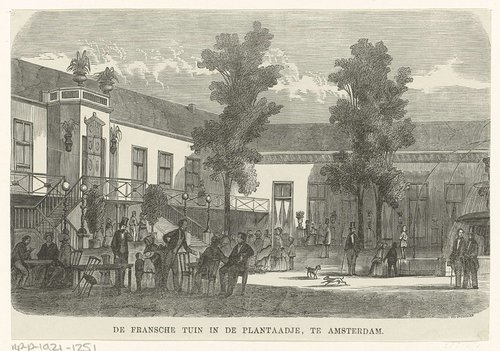
De Fransche tuin in de Plantaadje, te Amsterdam
1832 - 1888
Medium
wood engraving
Dimensions
75; 102
Rights
Public Domain
About this artwork
houtgravure en tekst in boekdruk
Art Historical Context
This delicate wood engraving by Dutch artist Popko van Groningen captures “De Fransche tuin in de Plantaadje, te Amsterdam,” a formal garden laid out in the city’s historic Plantage district. Created sometime during van Groningen’s lifetime (1832–1888), the small print—measuring just 102 × 75 mm—originally appeared alongside letterpress text, most likely as an illustration in a 19th-century guidebook or travel publication. The image reflects the period’s growing fascination with orderly, French-inspired landscaping amid Amsterdam’s expanding urban parks. Wood engraving, the technique employed here, allowed artists to render fine detail on end-grain blocks, making it ideal for the mass-produced books and periodicals that shaped public perceptions of cities in the Victorian era. Van Groningen’s precise linework would have helped readers visualize the geometric parterres and shaded promenades of the Plantage long before photography became commonplace. Today the print offers a charming window onto both a specific Amsterdam landmark and the broader cultural role of reproductive printmaking in documenting and popularizing urban green spaces.
About the Artist
Popko van Groningen · 1822–1888
Popko van Groningen (1822-1888) was a Dutch wood engraver, painter, and art collector who contributed to the revival of wood engraving in the Netherlands during the nineteenth century. Born on April 15, 1822, in Deventer and dying on November 1, 1888, also in Deventer, van Groningen represents the type of versatile provincial artist who worked across multiple media while also engaging in art colle...