
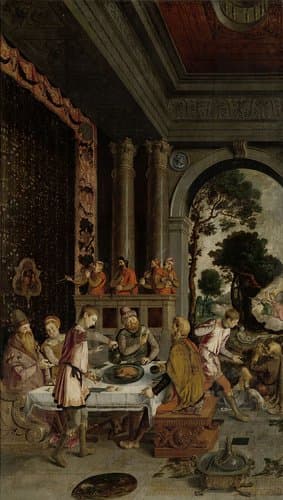
De gelijkenis van de rijke man en de arme Lazarus. Op de achterzijde de beelden van de heilige Petrus en Maria met kind op een terras, in grisaille
c. 1550 - c. 1575
Medium
oil on panel
Dimensions
135.5; 7.8; 208; 122; 224.8
Rights
Public Domain
About this artwork
height 208 cm x width 122 cm
Art Historical Context
This striking anonymous oil-on-panel painting from around 1550–1575, now housed in the Rijks, vividly depicts the biblical Parable of the Rich Man and Poor Lazarus from Luke 16. The tall, narrow format (208 × 122 cm) suggests may have served as a church altarpiece wing or devotional shutter, immersing viewers in a moral tale of earthly indulgence versus heavenly reward. The opulent rich man feasts in luxury while the beggar Lazarus suffers at his gate; after death, their fates reverse—Lazarus comforted in Abraham's bosom, the rich man tormented in hell—urging 16th-century audiences amid Reformation debates to reflect on charity and divine justice. Turning the panel reveals a masterful grisaille (monochrome gray) scene on the reverse: Saint Peter and the Virgin Mary with Child on a sunlit terrace. This sculptural illusion, mimicking stone reliefs, showcases the anonymous Netherlandish artist's technical prowess in oil, a medium perfected in the Low Countries for its luminous depth and detail. Such double-sided works were prized for multifunctional use in homes or chapels, blending narrative drama with serene iconography. A testament to late Northern Renaissance piety, this piece captures the era's blend of vivid storytelling and subtle virtuosity, inviting modern visitors to ponder timeless lessons of compassion.
About the Artist
anonymous
In the vast tapestry of art history, "Anonymous" stands not as a singular individual but as a collective designation for countless unidentified creators whose works have endured across millennia. These artists, spanning prehistoric cave painters to medieval illuminators and folk craftsmen, produced the foundational layers of human visual culture. Prior to the Renaissance, when individual fame emer...