
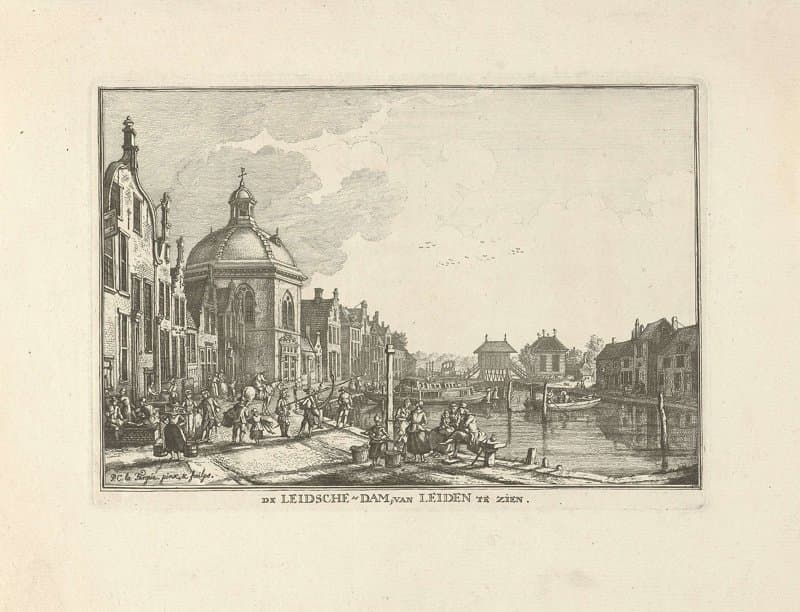
De kom in de trekvaart tussen Den Haag en Leiden in Leidschendam
1756 - 1782
Medium
etching
Dimensions
258; 180
Rights
Public Domain
About this artwork
verzamelaarsmerk, verso, gestempeld: Lugt 2228
Art Historical Context
Paulus Constantijn la Fargue (1729–1782), a Dutch draftsman and etcher from The Hague, captures a serene moment along the historic trekvaart—a towpath canal—in his etching *De kom in de trek tussen Den Haag en Leiden Leidschendam*. between 1756 and1782, this intimate print (180 × 258 mm) depicts basin (or lock area) in Leidschendam, a key on the vital waterway linking The Hague and Leiden. These canals were the backbone of 18th-century Dutch transport, ferrying passengers and goods via horse-drawn barges before modern railroads, reflecting the Netherlands' mastery of water management and trade. La Fargue, part of a talented artistic family, specialized in detailed topographical views that preserved everyday Dutch landscapes. His etching technique—biting acid into a metal plate to create fine lines—allowed for precise reproduction of watery reflections, distant sails, and bustling activity, making such scenes accessible beyond original drawings. This work exemplifies the Golden Age's lingering topographic tradition, blending realism with atmospheric depth. Verso bears a collector's mark (Lugt 2228), hinting at its prized status among connoisseurs. For visitors, it offers a window into 18th-century life on the water, where commerce and tranquility converged.
About the Artist
Paulus Constantijn la Fargue
Considered to be the most talented member of the La Fargue family of artists, he specialized in painting, drawing, and etching landscapes and townscapes with topographical details. Comment on works: Landscapes; Topography