
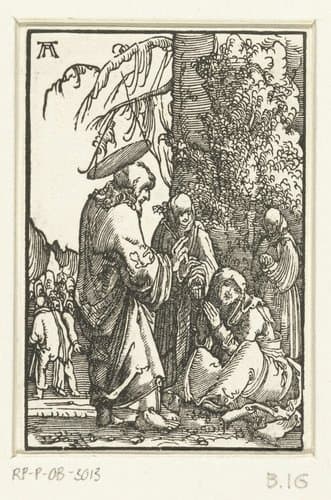
De val en verlossing van de mensheid
ca. 1506 - 1538
Medium
paper
Dimensions
48; 72
Rights
Public Domain
About this artwork
houtsnede
Art Historical Context
Albrecht Altdorfer a pioneering figure of the German Renaissance and leader of the Danube School, *De val en verlossing van de mensheid*The Fall and Redemption of) sometime between circa 1506 and 1538. This intimate woodcut on paper, measuring just 72 mm by 48 mm wide, captures profound biblical themes—the original sin of Adam and Eve followed by humanity's salvation through Christ—in a remarkably compact format. Altdorfer's shines in these miniature prints, which were popular during the early 16th century for their affordability and portability, allowing religious narratives to reach a wide audience beyond elite patrons. As a woodcut (*houtsnede* in Dutch), the work exemplifies the technique's bold, graphic qualities: intricate carvings on wooden blocks were inked and pressed onto paper, producing crisp lines and textures ideal for storytelling. Altdorfer's style blends meticulous detail with dramatic contrasts, influenced by the northern Renaissance's focus on nature and spirituality, though this piece emphasizes theological drama over his famed landscapes. This tiny artwork holds cultural weight as a snapshot of Reformation-era devotion, when such prints fueled personal piety amid religious upheaval. Visitors, imagine holding history in your palm—Altdorfer's vision of sin and grace endures as a testament to art's power to illuminate the human soul.
About the Artist
Albrecht Altdorfer · 1475–1538
Albrecht Altdorfer (c. 1480–1538) was a German painter, printmaker, and draftsman who stands as one of the founders of landscape painting as an independent genre. Born in Regensburg or nearby Altdorf, he learned art from his father Ulrich, a painter and miniaturist. Altdorfer spent most of his life in Regensburg, becoming a citizen in 1505 and later serving as the city's official architect and a m...