
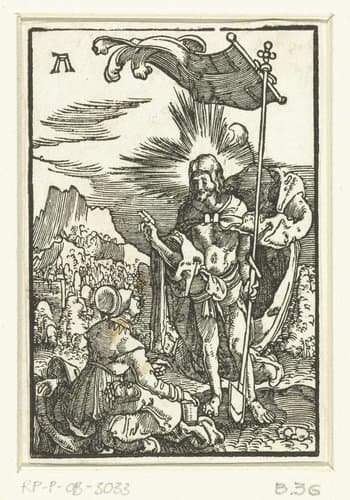
De val en verlossing van de mensheid
ca. 1506 - 1538
Medium
paper
Dimensions
72; 48
Rights
Public Domain
About this artwork
verzamelaarsmerk, verso midden onder, handgeschreven: ‘58’
Art Historical Context
**De val en vering van de mensheidThe Fall and Redemption of Humanity)** by Albrecht Altdorfer circa 1506–1538, invites visitors into the intricate world of Northern Renaissance devotion. This delicate work on paper, measuring just 72 × 48 mm, captures profound biblical narrative: humanity's original sin through Adam and Eve, followed by divine redemption. Altdorfer, a pioneering of the Danube School, blended meticulous detail with atmospheric depth, often elevating landscape as a character in religious scenes—a hallmark of his innovative style. Created during the early 16th century, amid the fervor of the Reformation, the artwork reflects the era's intense focus on salvation and human frailty. Its diminutive scale suggests it was a personal devotional object, perhaps a drawing or study meant for intimate contemplation rather than grand altarpieces. Altdorfer's technique on paper allowed for fine lines and subtle shading, showcasing his skill in rendering complex theological ideas in miniature form. A handwritten collector's mark ('58') on the verso hints at its cherished history among connoisseurs. This gem exemplifies how small-scale works carried immense spiritual weight, bridging everyday faith with artistic genius in Renaissance Germany.
About the Artist
Albrecht Altdorfer · 1475–1538
Albrecht Altdorfer (c. 1480–1538) was a German painter, printmaker, and draftsman who stands as one of the founders of landscape painting as an independent genre. Born in Regensburg or nearby Altdorf, he learned art from his father Ulrich, a painter and miniaturist. Altdorfer spent most of his life in Regensburg, becoming a citizen in 1505 and later serving as the city's official architect and a m...